Awards
SANS is pleased to recognize our members with three key awards each year.
ANNOUNCING SANS 2026 SOCIETY AWARDS RECIPIENTS
The Social and Affective Neuroscience Society is pleased to announce the inaugural class of SANS Fellows. This distinction recognizes members who have made exceptional and lasting contributions to the Society and to the field of social and affective neuroscience.
The Fellows were selected from among numerous nominations submitted by members of the Society. Through their scholarship, leadership, mentorship, and service, these individuals have played an important role in advancing research, fostering collaboration, and strengthening the visibility and impact of social and affective neuroscience.
SANS is honored to recognize their achievements and contributions to our community.
Help us to congratulate and welcome the following SANS Fellows
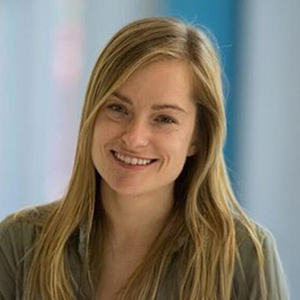
Chelsea Helion
Chelsea Helion is an Assistant Professor of Psychology and Neuroscience at Temple University, where she directs the Social and Affective Neuroscience Lab. She completed her PhD in Psychology at Cornell University, and her postdoctoral training in Social and Affective Neuroscience at Columbia University.
Her research program examines how individuals represent, recall, and regulate affective states, with a particular interest in how affective processes inform social cognition. Her lab examines the interplay between affective states and social processes across multiple contexts – ranging from decision-making to metacognition to dyadic conversation. To do so, she uses multiple neural, physiological, and behavioral measurement, coupled with a focus on naturalistic study design.
One area of her work has focused on emotions color how we interpret the external world, both in the moment and in memory. This has included examining how affective states are differentially represented from childhood into adulthood, how labelling a memory as eliciting a specific emotion shapes subsequent recall, and how affect informs autobiographical recall for morally relevant events.
Other work has studied emotion regulation, including examining the effectiveness of diverse emotion regulation approaches (e.g., perspective-taking, mindfulness) and assessing the usefulness and efficacy of lab-validated strategies such as cognitive reappraisal in high-intensity, multi-modal contexts.
In recent work, she and her research team have also studied how social relationships impact emotional experience, this has included leveraging natural language processing (NLP) methods to identify emotional markers of close, positive relationships and using experience sampling data to examine how social relational support influences emotional affectivity.
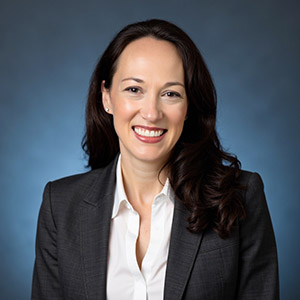
Kristen Lindquist
Kristen Lindquist, Ph.D., is a social and affective neuroscientist studying how emotions and social behavior arise from the dynamic interplay of brain, body, and culture. She holds the Robert K. and Dale J. Weary Endowed Chair in Social Psychology at The Ohio State University, where she is Professor of Psychology and a faculty member in the Social Psychology and Cognitive Neuroscience areas. By combining social cognition, psychophysiology, functional neuroimaging, and large-scale data science, her work investigates how conceptual knowledge, social context, and physiological states shape affective experience across development.
Using multimodal approaches, Lindquist has shown that affective and social experiences emerge from distributed brain networks supporting prediction, visceromotor action, and body-state representation. Her research has advanced constructionist models of emotion, illustrating how neural dynamics interact with cultural and social learning to produce the rich complexity of human emotion across the lifespan.
Her scholarship has been supported by federal and private funding and recognized with awards for scientific contribution and mentorship. She earned her A.B. and Ph.D. in Psychology from Boston College and completed postdoctoral training through the Harvard University Mind/Brain/Behavior Initiative, with affiliations at Harvard Medical School, the Martinos Center for Biomedical Imaging at Massachusetts General Hospital, and the Department of Psychology at Harvard University. She previously served on the faculty at the University of North Carolina at Chapel Hill.
As a Fellow of the Social Affective Neuroscience Society, Lindquist is honored to join a community advancing rigorous, theoretically grounded research on the neural bases of social and emotional life and to continue training the next generation of scientists.
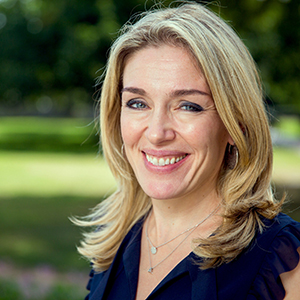
Abigail Marsh
Abigail Marsh is a Professor in the Department of Psychology and Interdisciplinary Program in Neuroscience at Georgetown University. She received her B.A. from Dartmouth College, her Ph.D. from Harvard University, and conducted post-doctoral research at the National Institute of Mental Health.
Her lab conducts research with extraordinary altruists, people with psychopathy, and typical adults and children in an effort to answer questions like: How do we understand what others think and feel? What drives us to help other people? What prevents us from harming them? Her research on these topics uses functional and structural brain imaging, as well as behavioral, cognitive, and pharmacological techniques and comprises over 100 publications in journals that include Proceedings of the National Academy of Sciences, Nature Human Behaviour, Nature Communications, and JAMA Psychiatry.
She has also written an award-winning trade book about her research called THE FEAR FACTOR (2017, Hachette) and has authored articles for The New York Times, Washington Post, NPR, Scientific American, and The Chronicle of Higher Education.
Her research has received awards that include the Cozzarelli Prize for scientific excellence and originality from the Proceedings of the National Academy of Sciences,

David Smith
David V. Smith is an Associate Professor of Psychology and Neuroscience at Temple University, where he directs the Neuroeconomics Laboratory and serves as Associate Director of Temple’s Brain Research and Imaging Center. After earning his Ph.D. in Cognitive Neuroscience from Duke University in 2012, he completed a postdoctoral fellowship at Rutgers University–Newark and launched his lab at Temple in 2017.
His research examines the behavioral and neural mechanisms that underlie responses to social and economic incentives and how those responses influence our decisions across the lifespan. He is particularly interested in how people evaluate rewards, decide whom to trust, and cooperate with others—and why these processes go awry in some individuals but not others. Combining neuroimaging, computational modeling, and transcranial electrical stimulation, his work aims to advance basic understanding and inform translational applications in clinical and policy contexts.
His research has been supported by the National Institute of Mental Health, the National Institute on Drug Abuse, and the National Institute on Aging. At Temple, he teaches courses on sensation and perception, decision neuroscience, behavioral economics, statistics, and functional neuroimaging. He has been named a Rising Star and a Fellow by the Association for Psychological Science and a Fellow of the Social and Affective Neuroscience Society.
He has received Temple’s Psychology Honors Excellence in Mentoring Award and the College of Liberal Arts’ Presidential Faculty Award for excellence in teaching and mentoring.
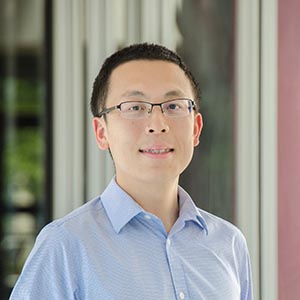
Shuo Wang
Dr. Shuo Wang is an Associate Professor of Radiology, Neurosurgery, and Biomedical Engineering at Washington University in St. Louis. He received his Ph.D. from Caltech in 2014 and completed postdoctoral training at Caltech and Princeton University in 2017.
His research integrates multimodal, advanced measurement techniques with sophisticated computational approaches to elucidate the neural mechanisms and computations underlying face and object processing, visual attention, emotion, and memory. The overarching questions guiding his work focus on how the brain recognizes faces and objects, discerns environmental significance, and translates visual information into memory.
He is particularly interested in the neural computations that support these cognitive processes. Using a multimodal approach, he investigates these questions at both the microscopic level—through state-of-the-art human single-neuron recordings—and the macroscopic level, employing fMRI, EEG, and intracranial EEG. These experimental methods are complemented by advanced computational techniques designed to handle complex, large-scale datasets.
Dr. Wang and his team have developed novel tools for deep learning–based analysis of neural responses, computational saliency and memory modeling, neural decoding, and automated video analysis. His research also includes characterizing individual differences in cognitive processes, particularly to understand how these processes are disrupted. To this end, he studies brain lesion patients, including rare congenital cases with focal amygdala lesions, as well as individuals with autism, representing extremes in cognitive variation that likely exist along a continuum.
His research has been recognized with an NSF CAREER Award, a DoD Young Investigator Award, the Dana Clinical Neuroscience Award, and a Powe Award.
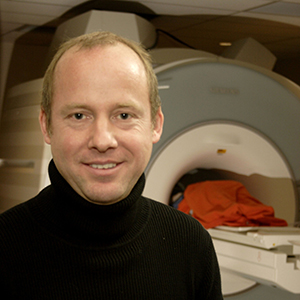
René Weber
René Weber received his Ph.D. (Dr.rer.nat.) in Psychology from the University of Technology in Berlin, Germany, and his M.D. (Dr.rer.medic.) in Psychiatry and Cognitive Neuroscience from the RWTH University in Aachen, Germany.
He is a Professor in the Department of Psychological and Brain Sciences and in the Department of Communication at the University of California in Santa Barbara, lead researcher of UCSB’s Media Neuroscience Lab (https://medianeuroscience.org), and the current director of UCSB’s Brain Imaging Center (https://www.bic.ucsb.edu).
He was among the first media psychology scholars who regularly use computational approaches and brain imaging technology (primarily fMRI) to investigate various topics related to media industries, from the appeal of media entertainment, representation in media productions, the impact of media violence exposure on cognition and emotion, to the persuasiveness and success of media campaigns. His recent work primarily focuses on moral judgment and decision-making in both real-life and in media, and on compulsive media use behaviors and its consequences for mental health.
He has published four books and more than 170 journal articles and book chapters (March 2026) in outlets such as Nature Human Behavior, PNAS Nexus, Behavior Research Methods, Neuroimage, Social Cognitive and Affective Neuroscience, Human Communication Research, Communication Methods and Measures, Journal of Communication, Media Psychology, and others. His research has been supported by grants from national scientific foundations in the United States, Germany, and South Korea as well as through private philanthropies and industry contracts.
He serves as an Associate Editor of the journal Computational Communication Research, and he is a Fellow of the International Communication Association. His main hobbies are traveling the world volunteering as medical professional in crisis areas and optimizing his skills as a certified FAA private pilot providing voluntary service in this role to the United States Civil Air Patrol.
2026 Inaugural Service Award Recipient
The Social and Affective Neuroscience Society (SANS) is honored to launch a special recognition award. We invite nominations for the SANS Service Award, honoring individuals whose sustained and exceptional contributions have strengthened both the field of social and affective neuroscience and the SANS community. This award celebrates those whose leadership, mentorship, and advocacy have advanced the science, broadened participation, and enhanced the infrastructure and visibility of our field.
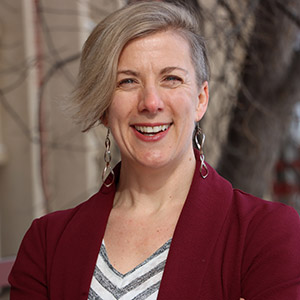
Kateri McRae
Professor & Chair, Department of Psychology, University of Denver
2026 SANS Inaugural Service Award Recipient
Kateri McRae is a professor in the Department of Psychology at the University of Denver. She has spent her career characterizing neural systems that support cognition and emotion. She has identified the principles that govern these neural systems to improve our understanding of effective emotion regulation. More specifically, she has demonstrated how using shifts in interpretation and perspective can improve our emotional well-being, an emotion regulation strategy known as cognitive reappraisal. Reappraisal is a generally effective, self-driven emotion regulation strategy, and is a powerful tool to fuel hope and persistence in the face of an uncontrollable, harmful environment. Her recent research has characterized different types of reappraisal (e.g., reinterpreting the present, focusing on the future, accepting the situation) and teasing apart the generation of alternative appraisals from implementation and elaboration. Dr. McRae considers her research on emotion regulation and emotional well-being as inextricable from what most people consider teaching and service responsibilities. She teaches a first-year seminar called, “Exploring Psychology Through Theater” and has co-authored a forthcoming book on the psychology of acting, The Actor’s Mind. She has been an academic advisor, faculty advising director, DU’s 4D faculty fellow for well-being, and department chair, roles for which knowledge of emotion regulation has been critical. She is obsessed with discerning what we can change, and what we cannot (in the brain, in life). While we can’t control the world, we can control our local environment, invest in communities we care about (like SANS), and offer perspective and interpretation shifts to one another – and she has data to show that can make a real difference.
2026 Distinguished Scholar Award
The Distinguished Scholar Award recognizes the broad scope and potentially integrative nature of scholarship in social and affective neuroscience. It honors a scholar who has made distinctively valuable research contributions across their career in areas by significantly advancing our understanding of the biological basis of social and affective processes or expanding the core of social and affective neuroscience discipline. The winner of this award will receive travel compensation (up to $500 USD), complimentary registration to the 2026 conference in San Diego as well as an invitation to be our distinguished scholar speaker at the conference

John P. O'Doherty
Division of Humanities and Social Sciences, California Institute of Technology, Pasadena, CA
2026 Distinguished Scholar Award Winner
John O’Doherty studies the computational and cognitive neuroscience of learning and decision making. His primary methodologies include computational modeling, behavioral analysis,
neuroimaging, and human electrophysiology. His research focuses on how the brain encodes the
value of stimuli, states, and actions to support adaptive decision-making and behavior. This work
includes investigating the mechanisms that underlie learning from trial-and-error feedback about the value of actions and stimuli.
He is also interested in understanding how different behavioral control mechanisms such as the
Pavlovian, habitual, and goal-directed systems, contribute to behavior. In addition, he has examined how the brain learns and makes decisions in social contexts, characterizing the computational mechanisms that support social learning and inference. More recently, his work has explored how these systems interact at both neural and behavioral levels, and how individual differences in these systems contribute to psychiatric disorders.
O’Doherty completed an undergraduate degree in Mathematics and Psychology at Trinity College
Dublin in 1996. He earned a D.Phil in Experimental Psychology from the University of Oxford in 2001
and subsequently served as a postdoctoral fellow at the Wellcome Department of Imaging
Neuroscience at University College London until 2004. He joined Caltech in 2004 and became a full
Professor of Psychology in 2009. From 2008 to 2010, he also held a Professorship in Cognitive
Neuroscience at Trinity College Dublin. He served as Director of the Caltech Brain Imaging Center
from 2014 to 2017 and became the Fletcher Jones Professor of Decision Neuroscience in October
2021.
Past Winners
2025 – Kevin Ochsner
2024 – Mauricio Delgado
2023 – Matthew Lieberman
2022 – Eveline Crone
2021 – Uta & Chris Frith
2019 – Nancy Kanwisher
2018 – Betsy Murray
2017 – B.J. Casey
2016 – John Cacioppo
2015 – James J. Gross
2014 – Elizabeth Phelps
2013 – Ralph Adolphs
2026 Mid-Career Award
The Mid-Career Award recognizes a mid-stage investigator who has made significant contributions to Social and Affective Neuroscience in terms of outstanding scholarship and service to the field. The winner of the award will receive a $500 honorarium, complimentary registration to the 2026 conference in San Diego, and deliver a short presentation at the event.
Shuo Wang
Department of Radiology, Washington University in St. Louis
2026 Mid-Career Award Winner
Dr. Shuo Wang is an Associate Professor of Radiology, Neurosurgery, and Biomedical Engineering at Washington University in St. Louis. He received his Ph.D. from Caltech in 2014 and completed postdoctoral training at Caltech and Princeton University in 2017. His research integrates multimodal, advanced measurement techniques with sophisticated computational approaches to elucidate the neural mechanisms and computations underlying face and object processing, visual attention, emotion, and memory. The overarching questions guiding his work focus on how the brain recognizes faces and objects, discerns environmental significance, and translates visual information into memory. He is particularly interested in the neural computations that support these cognitive processes. Using a multimodal approach, he investigates these questions at both the microscopic level—through state-of-the-art human single-neuron recordings—and the macroscopic level, employing fMRI, EEG, and intracranial EEG. These experimental methods are complemented by advanced computational techniques designed to handle complex, large-scale datasets. Dr. Wang and his team have developed novel tools for deep learning–based analysis of neural responses, computational saliency and memory modeling, neural decoding, and automated video analysis. His research also includes characterizing individual differences in cognitive processes, particularly to understand how these processes are disrupted. To this end, he studies brain lesion patients, including rare congenital cases with focal amygdala lesions, as well as individuals with autism, representing extremes in cognitive variation that likely exist along a continuum. His research has been recognized with an NSF CAREER Award, a DoD Young Investigator Award, the Dana Clinical Neuroscience Award, and a Powe Award.
Past Winners
2025 – Catherine Hartley
2024 – Luke Chang
2026 Early Career Award
The Early Career Award recognizes an early-stage investigator who has made significant contributions to Social and Affective Neuroscience terms of outstanding scholarship and service to the field. The winner of the award will receive a $500 honorarium, complimentary registration to the 2026 conference in San Diego, and deliver a short presentation at the event.
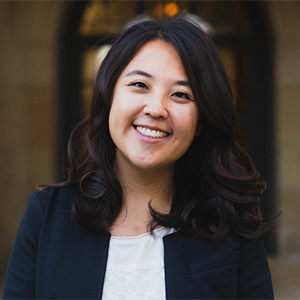
Elisa Baek
Department of Psychology, University of Southern California
2026 Early Career Award Winner
Elisa Baek is an Assistant Professor at the University of Southern California, where she directs the Social Connection Lab. Elisa draws from methods and approaches from social psychology, neuroscience, network science, and communication to study what helps people feel socially connected to one another. She received her Ph.D. from the University of Pennsylvania and completed her postdoctoral training at UCLA.
Past Winners
2025 – Mark Thornton
2024 – Justin Minue Kim
2023 – Oriel FeldmanHall
2022 – Jon Freeman
2021 – Catherine Hartley
2020 – Emily Falk
2019 – Jamil Zaki
2018 – Leah Somerville
2026 Innovation Award
The SANS Innovation Award recognizes a particular article authored by a SANS member and published in a scholarly outlet that makes a contribution likely to generate the discovery of new hypotheses, new phenomena, or new ways of thinking about the discipline of Social and Affective Neuroscience. The award selection will focus on a contribution’s conceptual innovation and potential to motivate new research and further conceptual investigation. At least one of the authors must currently be a SANS member in good standing (at the time the selection occurs).
2026 Innovation Award Winner Announced!
Please join us in congratulating the or the 2026 SANS Innovation Award Winner!
Jadyn S.Park et al.
2026 Innovation Award Winner
Emotional arousal enhances narrative memories through functional integration of large-scale brain networks. Jadyn S.Park et al. (2025)
“Our Innovation Award winner was chosen from nominations submitted by the SANS community, shortlisted by the awards committee, and ultimately selected by a vote of attendees at the SANS 2026 Conference.”
Please take the time to read their excellent article.
Past Winners
2025 – Xiaoxue Gao et al.The psychological, computational and neural foundations of indebtedness (2024).
https://doi.org/10.1038/s41467-023-44286-9
2024 – Catalina Camacho et all. Large-scale encoding of emotion concepts becomes increasingly similar between individuals from childhood to adolescence (2023)
https://www.nature.com/articles/s41593-023-01358-9
2023 – Lin, C., Keles, U. & Adolphs, R. Four dimensions characterize attributions from faces using a representative set of English trait words. Nat Commun 12, 5168 (2021). https://doi.org/10.1038/s41467-021-25500-y
2022 – Lockwood, P., Apps, M. & Chang, S.W.C (2020). Is There a ‘Social’ Brain? Implementations and Algorithms. Trends in Cognitive Sciences, 24(10), 802-813. https://doi.org/10.1016/j.tics.2020.06.011
2021 – Dal Monte, O., Chu, C., Fagan, N.,and Chang, S (2020). Specialized medial prefrontal–amygdala coordination in other-regarding decision preference. Nature Neuroscience, 2020 April 23(4): 565-574.
2019 – FeldmanHall, O., Dunsmoor, J. E., Tompary, A., Hunter, L. E., Todorov, A., & Phelps, E. A. (2018). Stimulus generalization as a mechanism for learning to trust. Proceedings of the National Academy of Sciences, 115(7), E1690-E1697.
2018 – Parkinson, C., Kleinbaum, A.M. & Wheatley, T. (2017). Spontaneous neural encoding of social network position. Nature Human Behavior, 1(5), 0072.
2017 – Lockwood, Patricia L., Apps, M.A.J., Valton, V., Viding, E., Rosier, J.P. (2016). Neurocomputational mechanisms of prosocial learning and links to empathy. Proceedings of the National Academy of Sciences, 113, 9763-9768.
2017 – Stolier, Ryan M. & Freeman, J.B. Neural pattern similarity reveals the inherent intersection of social categories. Nature Neuroscience, 19, 795-797.
2016 – Jack, Rachael. E., , Garrod, O.G.B., Schyns, P.G. (2014) Dynamic facial expressions of emotion transmit an evolving hierarchy of signals over time. Current Biology, 24, 187-192.
2015 – Preston, Stephanie D. (2013). The origins of altruism in offspring care. Psychological Bulletin, 139, 1305-1341.
2014 – McKell Carter, R., Bowling, D. L., Reeck, C., & Huettel, S. A. (2012). A distinct role of the temporal-parietal junction in predicting socially guided decisions. Science, 337, 109-111.
2013 – Yarkoni, T., Poldrack, R. A., Nichols, T. E., Van Essen, D. C., & Wager, T. D. (2011). Large-scale automated synthesis of human functional neuroimaging data. Nature Methods, 8, 665-670.